
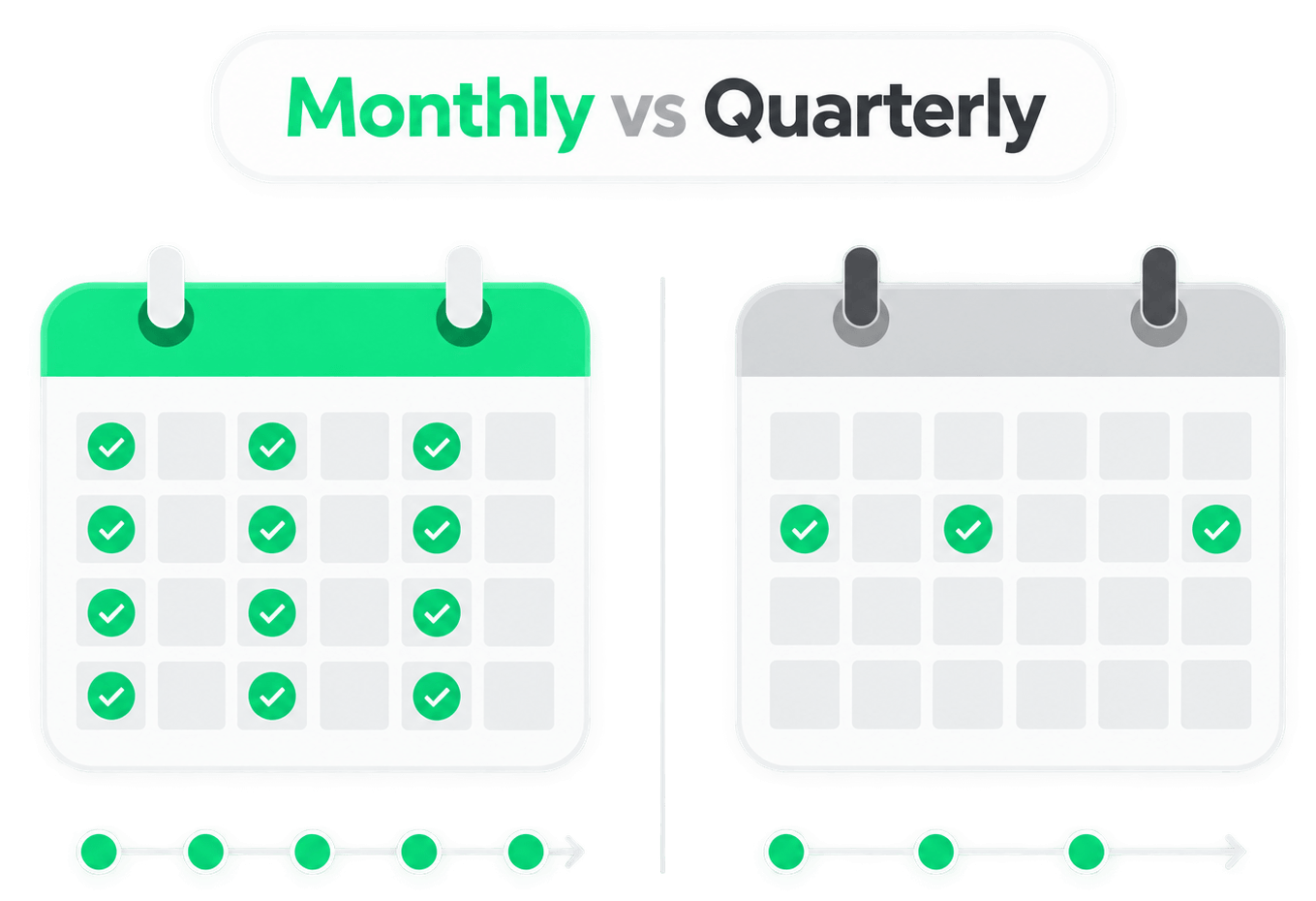

Quarterly bookkeeping means you’re always looking backward.
If you are waiting on a bookkeeper who closes the books every three months, you are making this week’s decisions with information that is already old.
THE QUARTERLY BOOKKEEPER
Numbers arrive 60–90 days after the fact.
Surprises show up at quarter’s end, not when they happen.
Tax time becomes a scramble to reconstruct months of activity.
Cash-flow decisions are made using outdated information.
MONTHLY, EVERY TIME
Books closed and reconciled every month, on schedule.
Financial reports in your hands while they are still useful.
Payroll and books stay in sync — no quarter-end reconciliation project.
Tax time becomes a formality instead of a fire drill.
The cost of waiting on your numbers.
Blind decisions
You cannot manage cash flow, pricing, or hiring using numbers that are two or three months stale.

Payroll & books don’t match
When bookkeeping and payroll live with separate vendors, reconciling them becomes its own project.

Year-end panic
A full quarter of catch-up work right before taxes are due — every single year.
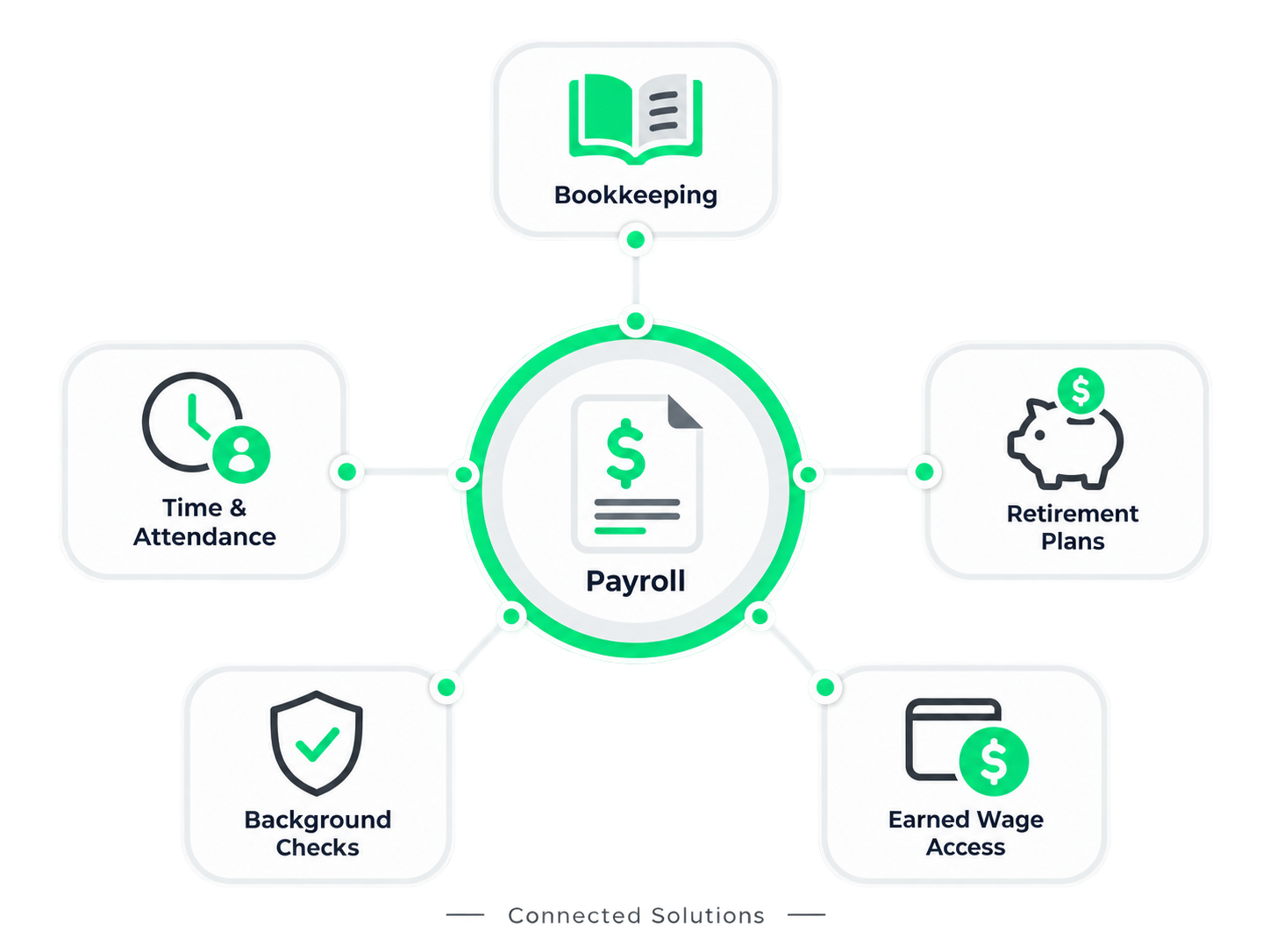
Payroll and bookkeeping work better when they stay connected.
The monthly cadence is more than a reporting preference. One connected relationship for payroll and books keeps the process current without creating another reconciliation project at month- or quarter-end.
Questions & answer
How often are my books closed?
Monthly, based on the proposed service positioning.
Why does monthly bookkeeping matter?
Current numbers are more useful for cash-flow, pricing and hiring decisions.
Can payroll and bookkeeping stay connected?
That is a central part of the proposed bundled-service story.